Payload examples and practical margin
Weigh the rig you actually cast
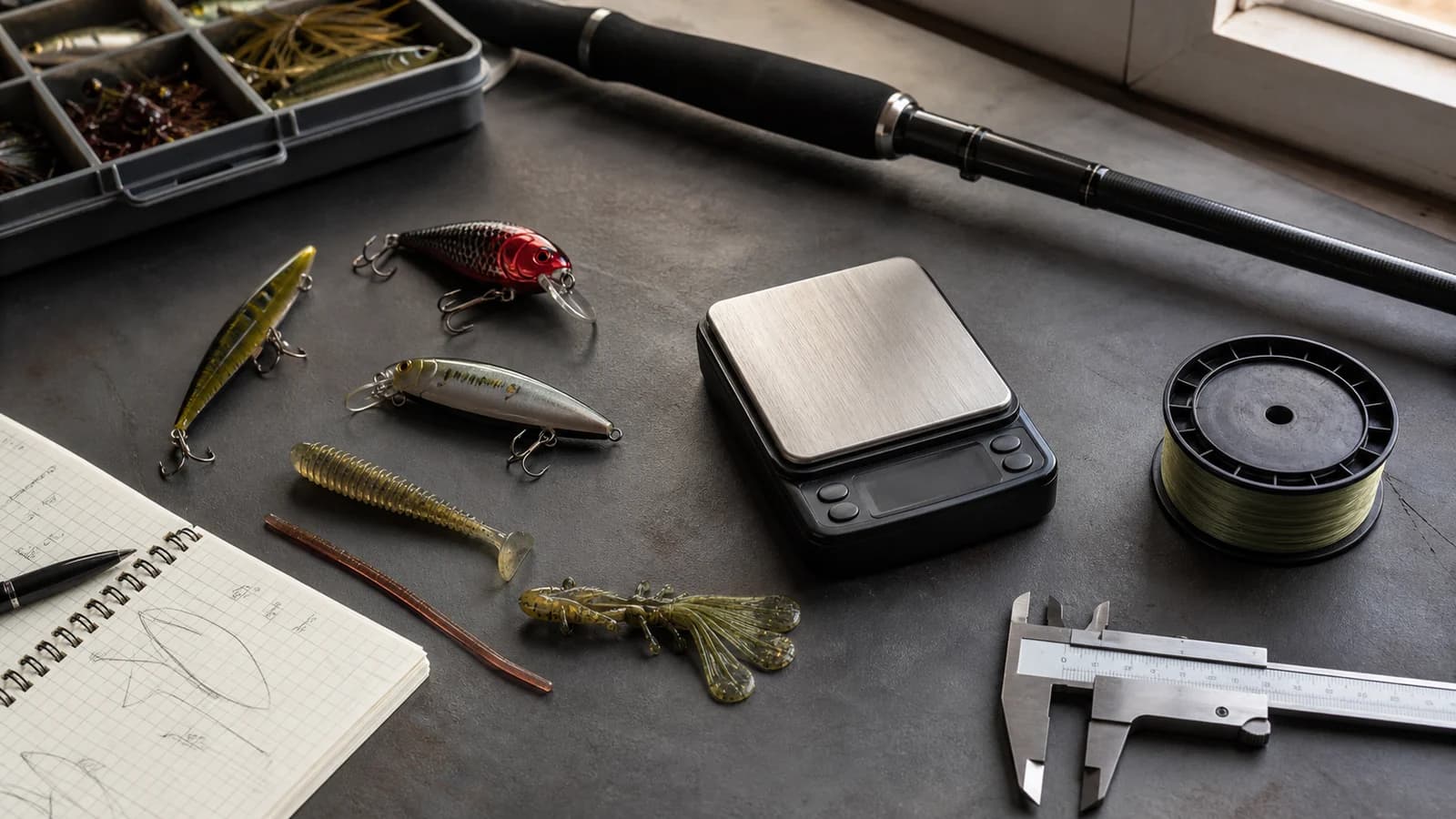
Use a small digital scale or add reliable component weights. Convert units consistently: one ounce equals 28.35 grams. Record several normal rigs rather than a single theoretical maximum.
A rod rated 1/8 to 3/4 oz may cast a 3/8 oz compact jig comfortably while feeling less controlled with a bulky lure of the same scale weight. The rating is a starting envelope, not a guarantee for every shape and casting motion.
- Jig head or sinker
- Hook and split rings
- Soft-plastic trailer
- Blade, skirt or added hardware
- Leader connector when unusually heavy
Use the middle of the range for repeatable everyday casting
A payload near the middle normally gives the blank room to load and recover without demanding perfect timing. Anglers using a smooth lob may work closer to an upper limit than anglers making abrupt overhead casts, but the printed maximum should never become a performance target.
When one rod must cover two lure groups, choose the blank that handles the most frequent payload well. Do not sacrifice every normal cast for a rare heavy lure.
Match the bending profile to the hook system
Fast action supports direct contact and quick power transfer for many single-hook techniques. Moderate and moderate-fast actions spread load more progressively, which can keep small treble hooks pinned and make moving baits easier to cast.
Power determines the general load class. Action describes where the blank bends first. Read both together and compare the actual Daiwa model specification.
A safe test confirms what the table cannot
Begin with a smooth cast in open space. The blank should load progressively without feeling locked, unstable or excessively delayed. Check lure flight, tip recovery and accuracy before increasing force.
If the lure repeatedly feels too light to load the rod or too heavy to control, change the rod or payload. Do not solve a mismatch with a harder cast.
Questions anglers ask before purchase
Should lure weight be in the middle of the rod rating?
For a versatile everyday setup, the middle is a useful target. Technique, lure shape and casting style can justify movement within the published range.
Does a soft-plastic trailer count toward lure weight?
Yes. Count every component that is cast, including the hook, soft plastic, sinker and attached hardware.
Can I cast the maximum weight printed on the rod?
The printed maximum is a boundary, not a target. Use a smooth cast and add safety margin for bulky lures, abrupt casting or uncertain component weights.
What was checked and what was not claimed
This page uses current manufacturer specifications and transparent decision criteria. It is independent desk research, not sponsored placement and not a claim of hands-on testing. Product facts were checked on August 7, 2026; availability and specifications can change.