Rod choices that change the result
The printed lure rating is the first filter
A rod casts best when the total working payload allows the blank to load progressively. Include the lure, hook, trailer and any added weight. If your normal payload sits at the extreme edge of a rating, move to a more appropriate blank instead of treating the printed maximum as a target.
Power names such as medium-light or medium are useful only inside a specific series. Compare the numerical lure and line ranges when moving between Daiwa families.
- Keep the common lure near the middle of the published range.
- Count the complete rig, not the lead head alone.
- Use line rating as a compatibility check, not a promise of breaking strength.
Action controls where the rod begins to bend
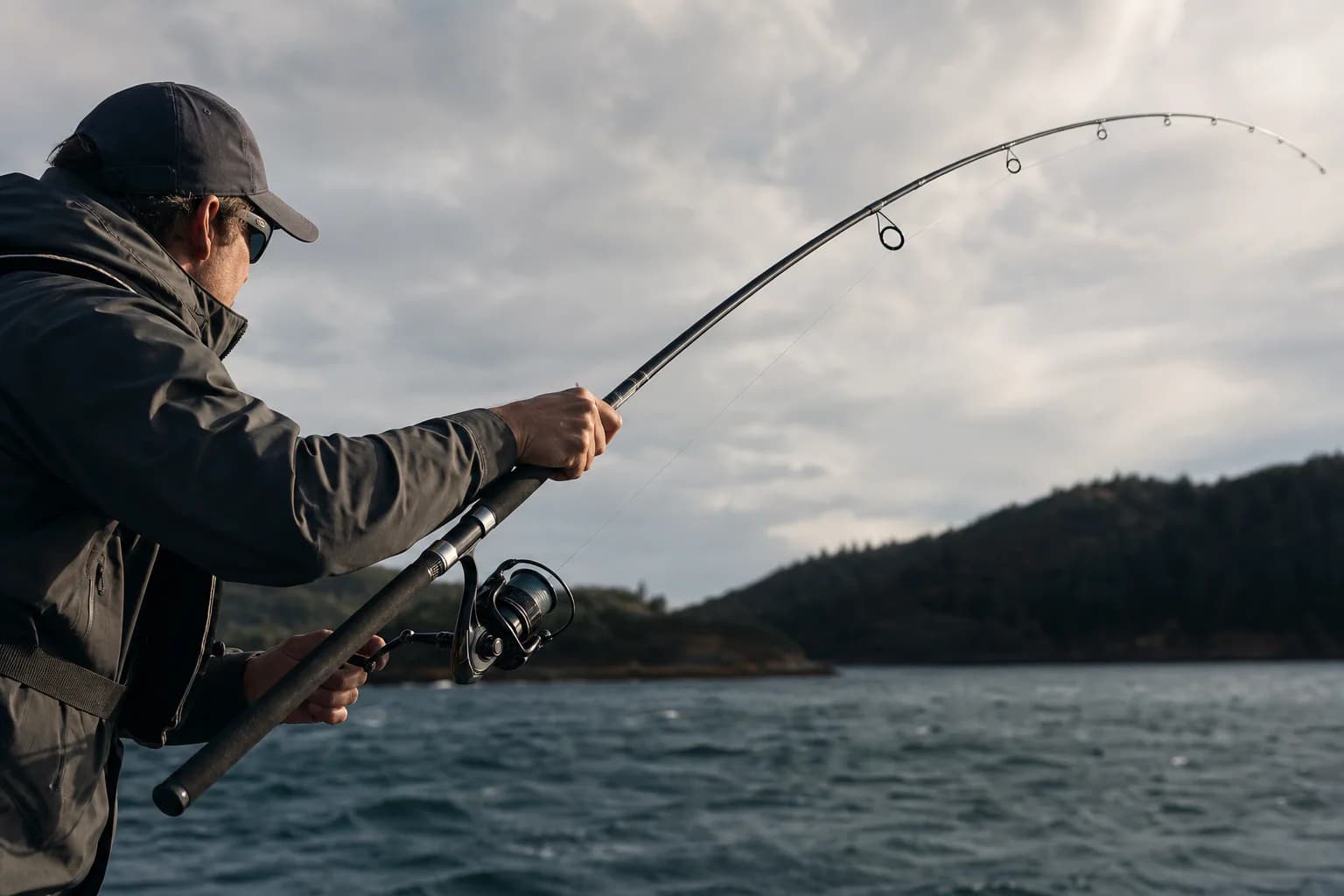
A fast-action rod concentrates more flex near the tip and reaches the stronger lower blank sooner. That can improve contact and hook control. A more moderate action spreads the load, often making moving baits and treble hooks more forgiving.
Action is not the same as power. A medium-power fast rod and a medium-power moderate rod can share a strength label while behaving very differently during casting and under a fish.
Length buys leverage and line control, but costs space
Longer rods can improve casting distance, sweeping hooksets and line control around current. Shorter rods can be more accurate in tight cover, easier in a kayak and simpler to transport. Handle length matters too: the rod must clear clothing and fit the casting motion.
Balance the rod with the intended reel before deciding that the lightest blank is the most comfortable. A slightly heavier reel can move the balance point back toward the hand.
Use Procyon Inshore as a series-level reference, not a universal answer
Daiwa describes the 2026 Procyon Inshore family with HVF Nanoplus graphite, X45 bias construction, cork handles and braid-ready Fuji guides. The family contains both spinning and casting models, so the series name still leaves an important model-level choice.
For redfish, flounder, speckled trout and similar inshore work, compare exact lure range, length, power and handle layout against the shore, kayak or boat environment.
Starting points with a stated limit
These are research starting points, not a claim that one product is universally best.

Daiwa 2026 Procyon Inshore
The current US series combines HVF Nanoplus graphite, X45 reinforcement and braid-ready Fuji guides.
Do not choose it when: Five spinning and five casting models cover different loads. Select the exact model, not the family name.

Daiwa AIRD Coastal Inshore
A useful comparison point when the priority is a practical coastal rod rather than premium blank technology.
Do not choose it when: Verify the exact generation and model specifications with the seller because family names may span several revisions.
Amazon US affiliate links use the associate tag fishfather-20. We may earn from qualifying purchases. Prices and availability are checked at the seller; always verify the exact model code, size, retrieve side and seller terms.
Questions anglers ask before purchase
What power Daiwa spinning rod should I choose?
Choose from the complete lure weight and cover first. Light and ultralight suit low payloads; medium-light and medium cover many freshwater techniques; medium-heavy becomes relevant with heavier rigs, current or cover.
Is a fast-action rod always more sensitive?
Not automatically. Material, construction, balance, line and grip all affect transmitted feel. Fast action changes the bending profile and can make direct lure control easier.
What rod length is best for shore fishing?
Longer rods can improve distance and line control, but the best length depends on vegetation, casting room, transport and lure weight. Do not add length that makes accurate casting harder.
What was checked and what was not claimed
This page uses current manufacturer specifications and transparent decision criteria. It is independent desk research, not sponsored placement and not a claim of hands-on testing. Product facts were checked on August 7, 2026; availability and specifications can change.