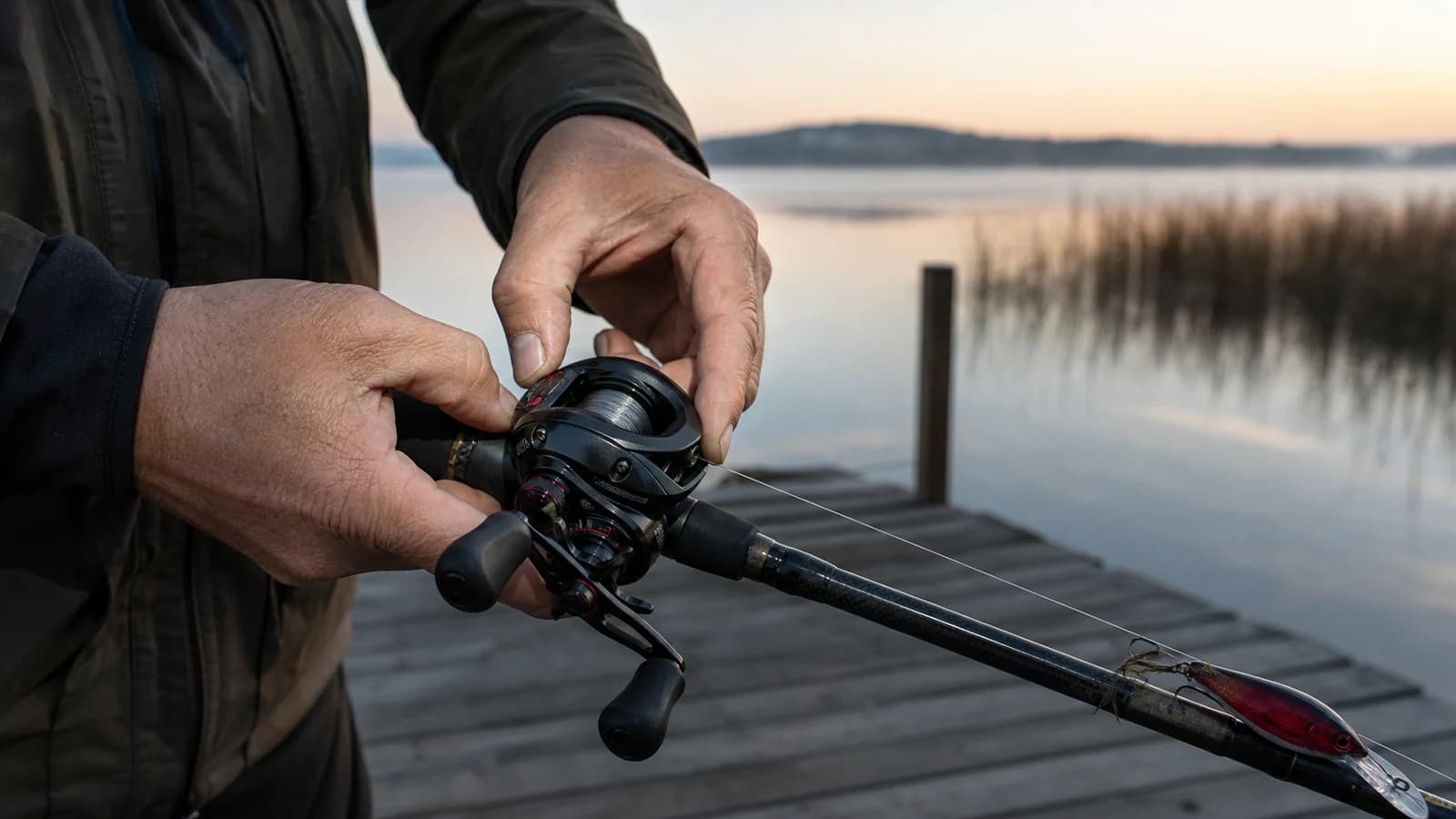
Baitcasting choices before model and color
Make the first ten casts deliberately boring
Fill the spool to the manufacturer's intended level, thread the line through the T-Wing guide correctly and tie a compact knot. Begin with more magnetic braking than an experienced caster might use. The first objective is a clean, repeatable trajectory, not maximum distance.
Use a lure in the center of the rod's range. Smooth acceleration lets the brake and spool work predictably. Once the cast remains controlled, reduce braking one small step at a time.
- Do not overfill the spool.
- Keep the lure within the rod and reel working range.
- Stop the spool with the thumb before the lure lands.
- Change one setting at a time.
TWS and Magforce address different parts of the cast
Daiwa's T-Wing System opens the line path during the cast to reduce the angle and friction at the guide, then returns line to a narrow channel during retrieve. Magforce applies magnetic influence to control spool speed. The systems complement each other, but neither removes the need for appropriate line, lure and thumb control.
Zero Adjuster is intended to preserve a factory-set spool tension baseline on supported models. Treat the external magnetic dial as the routine adjustment and avoid repeatedly changing multiple variables.
Choose retrieve speed by the work, not the label
A mid-speed ratio is the safest single-reel choice because it can slow down for moving baits and still recover slack effectively. Lower ratios can feel more controlled with high-resistance lures. Higher ratios help when picking up line after a pitch or moving fish away from cover.
Compare inches per turn as well as the ratio because spool diameter changes actual line recovery.
Salt, vegetation and impact still require normal care
Daiwa's HYPERDRIVE elements are designed around gear support, clutch operation and alignment, but reel care remains part of performance. Keep the levelwind clean, inspect line for buried loops and do not spray contaminants deeper into the frame.
For brackish or salt exposure, verify that the exact reel is intended for the environment and follow the official care instructions.
Starting points with a stated limit
These are research starting points, not a claim that one product is universally best.

Daiwa Tatula 100
Current Daiwa specifications include TWS, Magforce, Zero Adjuster and 6.3:1, 7.1:1 and 8.1:1 retrieve choices.
Do not choose it when: Select left or right retrieve intentionally and match ratio to the technique.
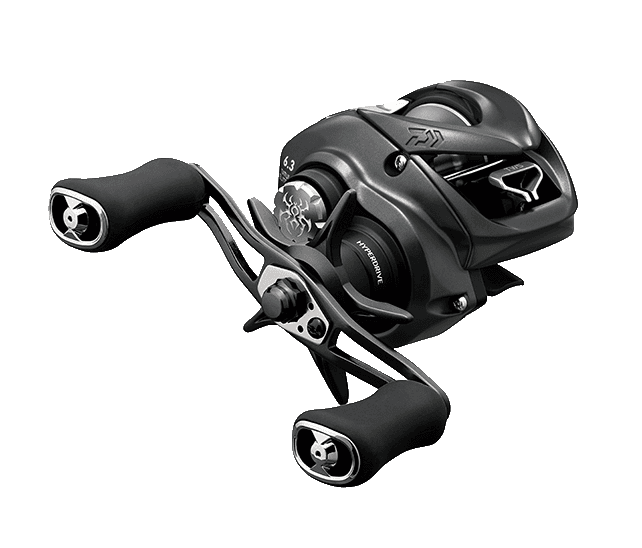
Daiwa 2026 Tatula Elite TW100
Daiwa pairs TWS with an LC Concept spool and Magforce-Z Boost, while the aluminum housing supports alignment.
Do not choose it when: A distance-focused reel is not automatically the easiest option for very light lures or tight-range pitching.
Amazon US affiliate links use the associate tag fishfather-20. We may earn from qualifying purchases. Prices and availability are checked at the seller; always verify the exact model code, size, retrieve side and seller terms.
Questions anglers ask before purchase
Which Daiwa baitcaster is best for a first setup?
A versatile 100-size Tatula with a mid-speed ratio is a sensible reference, provided the rod and lure range match. Begin with conservative braking.
What causes backlash on a baitcaster?
Backlash occurs when spool speed exceeds the rate at which line leaves the reel. Abrupt casting, low braking, overfilled line, wind and an unsuitable lure-to-rod match can all contribute.
Should spool tension remove all side play?
Follow the exact Daiwa manual. Models with Zero Adjuster are designed around a factory baseline; routine control is normally handled with the brake dial and thumb.
What was checked and what was not claimed
This page uses current manufacturer specifications and transparent decision criteria. It is independent desk research, not sponsored placement and not a claim of hands-on testing. Product facts were checked on August 7, 2026; availability and specifications can change.