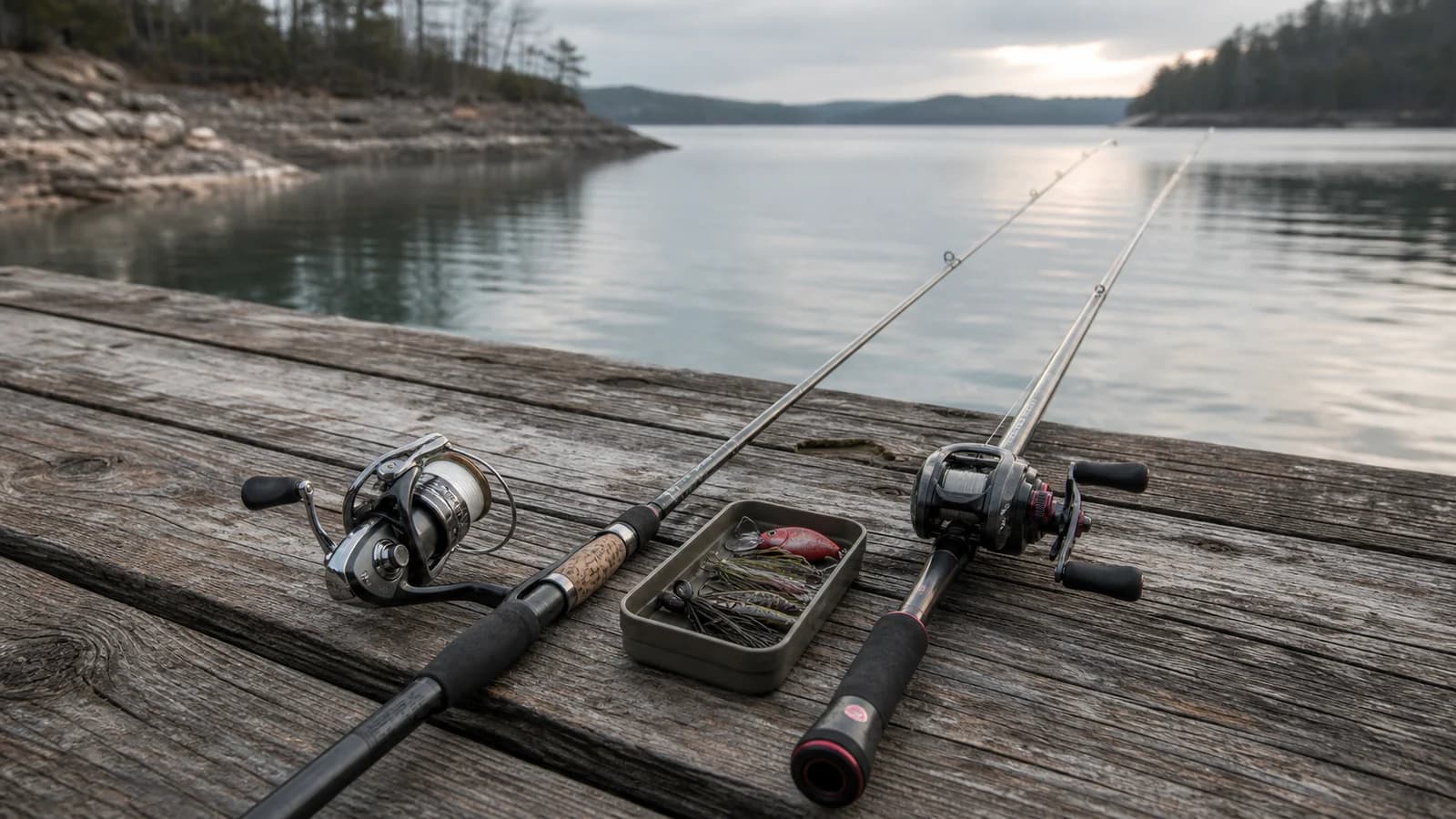
Spinning and baitcasting tradeoffs
The spool changes the casting problem
A spinning reel holds the spool stationary during the cast. Line peels from the spool lip, which makes low payloads easier to launch but introduces line coils and potential wind knots. A baitcaster rotates the spool, creating a direct and compact line path while requiring brake and thumb control to keep spool speed aligned with lure flight.
This mechanical difference explains more than the marketing category. It should be the first decision.
Baitcasting offers active control, spinning offers low interruption
A trained thumb can slow a baitcaster during flight and stop the lure precisely. Spinning can still be accurate, especially with finger feathering, but the controls feel different. In open water, the theoretical accuracy advantage may matter less than comfort and clean line flow.
Around docks, laydowns and repeated close targets, baitcasting ergonomics can become valuable. On a windy bank with small lures, spinning often restores consistency.
Both systems fail when the spool is filled poorly
Spinning reels need controlled fill level, correct line lay and management of loose loops. Baitcasters need even tension, a suitable fill level and prevention of buried line. Braid changes diameter and handling but does not remove these fundamentals.
Match leader knots to the rod guides and casting distance. A thick knot repeatedly passing through micro guides can turn a correct reel choice into a frustrating setup.
Choose one for the normal day, add the other for a real gap
If most lures are light and casting space varies, begin with spinning. If most lures load a casting rod well and targets demand repeated control, begin with baitcasting. If both conditions occur regularly, two focused outfits are usually better than one compromised outfit.
Daiwa Fuego LT is a useful spinning reference; Tatula 100 is a useful baitcasting reference. They are not equivalents at every price or load, but they make the platform difference concrete.
Questions anglers ask before purchase
Is baitcasting better than spinning?
No system is universally better. Baitcasting offers direct spool control and compact ergonomics; spinning handles light lures and variable conditions with fewer adjustments.
Can a beginner start with a baitcaster?
Yes, with a compatible lure and rod, conservative braking, correct spool fill and deliberate practice. Spinning remains the simpler default for light and general-purpose use.
Which casts farther?
Distance depends on lure aerodynamics, payload, rod loading, line and skill. A tuned baitcaster can excel with suitable lures; spinning often performs more consistently with light payloads.
What was checked and what was not claimed
This page uses current manufacturer specifications and transparent decision criteria. It is independent desk research, not sponsored placement and not a claim of hands-on testing. Product facts were checked on August 7, 2026; availability and specifications can change.