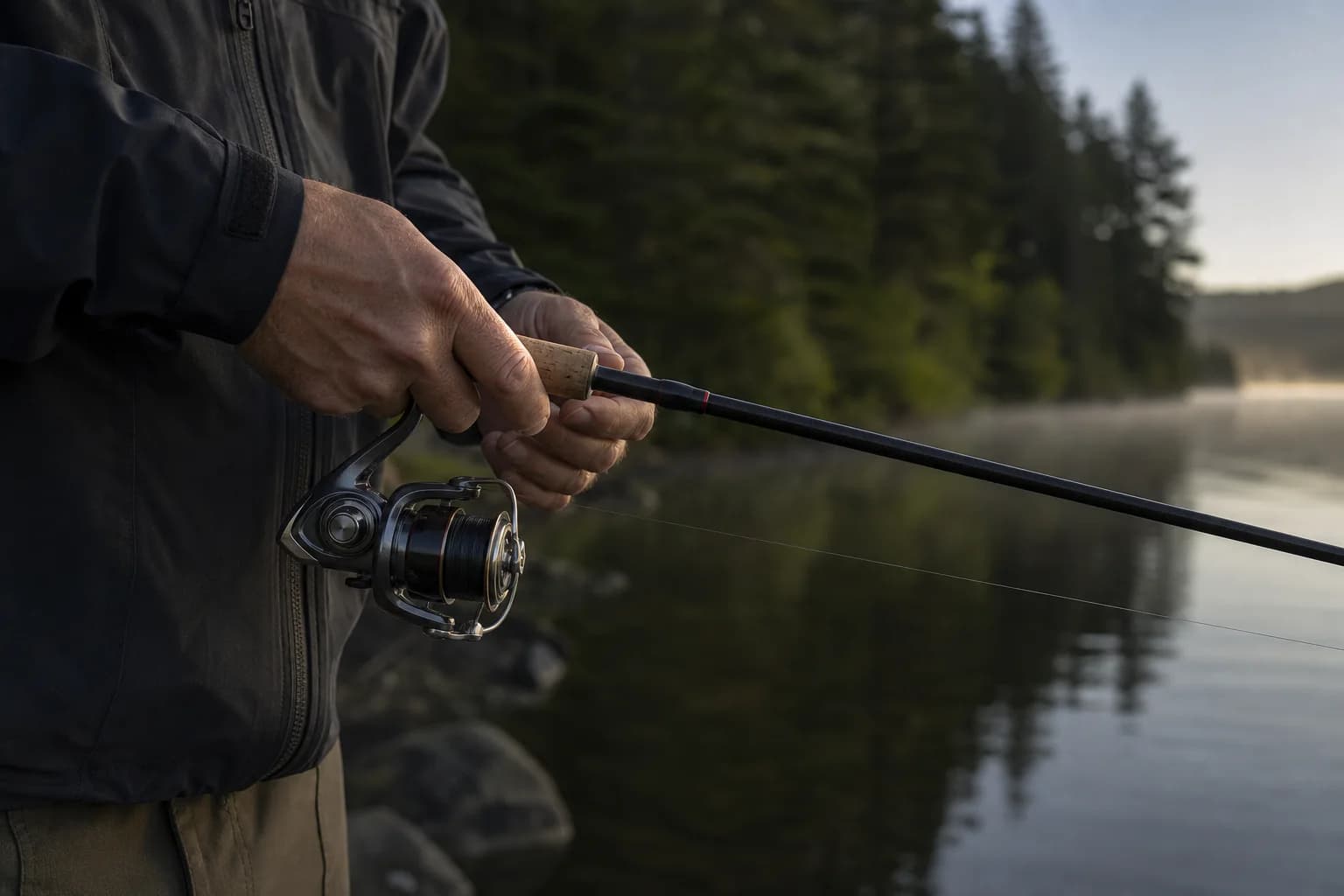
Daiwa reel starting points by fishing job
Start with the job, not the product name
This tool narrows the platform. Confirm size, capacity, retrieve side and seller before purchase.
Daiwa Fuego LT
A light, responsive spinning starting point for freshwater and lighter presentations.
Check current Amazon optionsAffiliate link. We may earn from qualifying purchases. Verify the exact model and seller.Spinning and baitcasting solve different control problems
Spinning reels are usually the lower-friction entry point for light lures, wind, skipping and anglers who want fewer casting adjustments. The fixed spool also makes line management easier to understand at the start. Baitcasting reels put direct spool control in the angler's hand. That can improve accuracy, retrieve ergonomics and line control with suitable lure weights, but the brake, spool fill and thumb all become part of the setup.
Neither system is automatically more advanced. The right choice is the one that works inside the complete rod, lure and line envelope. A well-matched spinning outfit will outperform a poorly matched baitcaster, and the reverse is equally true.
- Choose spinning for light presentations, wind tolerance and an easier learning curve.
- Choose baitcasting for repeated target casting, compact ergonomics and direct spool control.
- Choose a conventional or heavy spinning platform when capacity and sustained load become the primary requirements.
Reel size is a capacity decision, not a quality grade
Daiwa size numbers organize a family, but a 2500 in one platform is not guaranteed to feel identical to a 2500 in another. Use the manufacturer specification table for the exact model. Compare reel weight, line capacity, maximum drag, retrieve per turn and handle configuration together.
A 1000-2000 size often suits ultralight and finesse work. The 2500-3000 range covers a broad amount of freshwater fishing. A 3000-5000 reel becomes relevant when braid capacity, leader diameter, current or inshore species increase the load. Larger sizes belong to genuinely heavy line and offshore applications, not simply to anglers who want more power.
Read Daiwa feature names as engineering choices
LT means Light and Tough: a design direction that reduces unnecessary mass while protecting useful strength. AIRDRIVE components focus on the front of a spinning reel to reduce rotational inertia and improve response. Monocoque, or MQ, uses a one-piece body concept that allows a larger gear and a rigid support structure. MAGSEALED is a barrier technology used in selected locations; it is not a substitute for normal saltwater care.
On Daiwa baitcasters, TWS opens the line path during the cast to reduce resistance. Magforce manages spool speed magnetically. HYPERDRIVE DESIGN groups several drivetrain and support ideas around smoothness, alignment and durability. These features matter only when they address your actual fishing load.
Maintenance and line setup can erase or preserve the advantage
A reel selected correctly can still perform poorly with excess spool fill, line twist, an unsuitable leader knot or a drag that was never checked under load. Leave the correct clearance at the spool lip, install braid under tension and set drag with the rod and line system assembled.
After salt exposure, follow Daiwa's care guidance, use a light fresh-water rinse rather than a high-pressure spray, dry the reel and inspect the line roller, handle and spool lip. Service intervals should reflect use, not the calendar alone.
Starting points with a stated limit
These are research starting points, not a claim that one product is universally best.
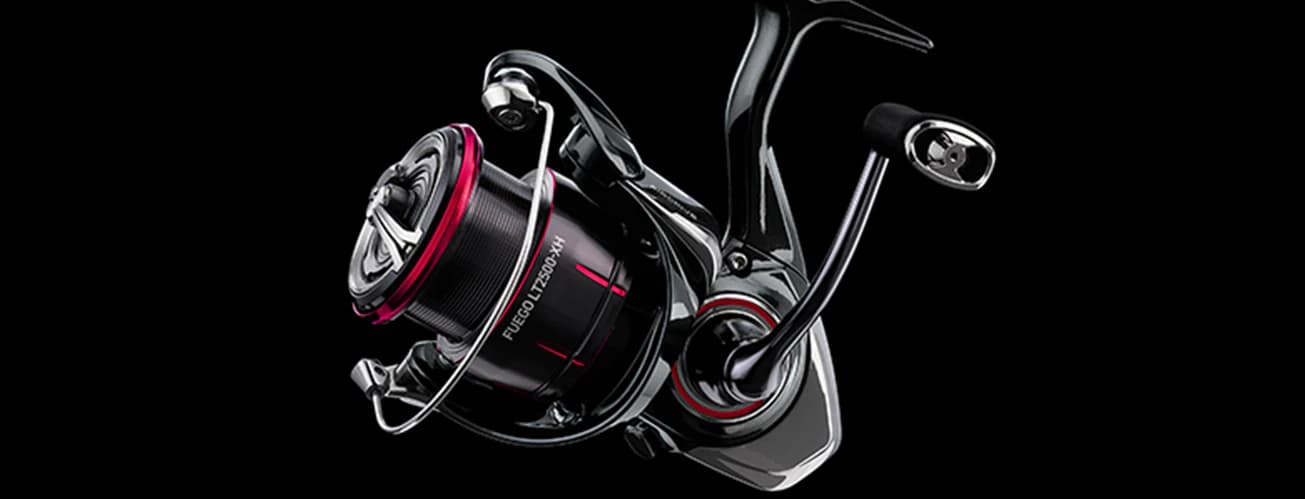
Daiwa Fuego LT
Daiwa specifies a ZAION V body, AIRDRIVE rotor and bail, Tough Digigear and a Magsealed body in the current US family.
Do not choose it when: Choose the exact size from capacity and rod balance; the lightest option is not automatically the best for current or salt load.
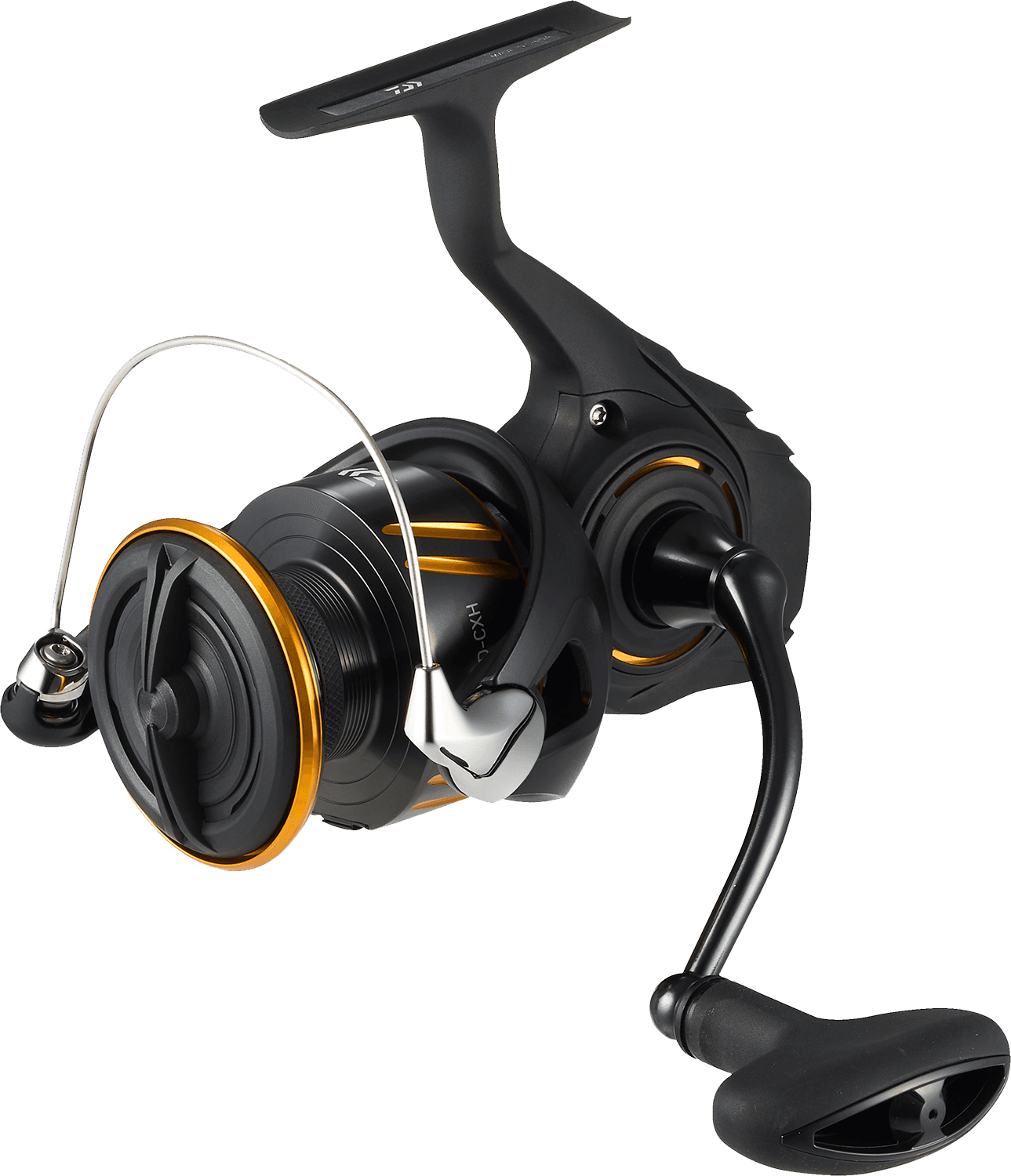
Daiwa BG MQ
The one-piece Monocoque aluminum body is designed around rigidity, gear support and saltwater-capable applications across a wide size range.
Do not choose it when: The family spans very different sizes. Do not use the BG MQ name alone as a substitute for checking weight and capacity.

Daiwa Tatula 100
TWS, Magforce, Zero Adjuster and multiple gear ratios make it a logical reference point for controlled lure casting.
Do not choose it when: A baitcaster still needs a compatible rod and lure range. Brake technology cannot compensate for a poor system match.
Amazon US affiliate links use the associate tag fishfather-20. We may earn from qualifying purchases. Prices and availability are checked at the seller; always verify the exact model code, size, retrieve side and seller terms.
Questions anglers ask before purchase
What Daiwa reel size is best for bass fishing?
A 2500-3000 spinning reel or a 100-size baitcaster covers many bass applications, but the deciding factors are lure range, line capacity, cover and rod balance.
Is Fuego LT suitable for saltwater?
Selected Fuego LT features support water resistance, but suitability depends on size, exposure and care. Rinse lightly after salt use and follow Daiwa service guidance.
What is the difference between LT and MQ?
LT is Daiwa's Light and Tough design concept. MQ refers to a one-piece Monocoque body structure. A reel can use one concept, both, or neither depending on the platform.
Should a beginner choose spinning or baitcasting?
Spinning is normally easier for light lures and requires fewer casting adjustments. A beginner can use baitcasting successfully when the lure, rod, spool fill and brake settings are matched carefully.
What was checked and what was not claimed
This page uses current manufacturer specifications and transparent decision criteria. It is independent desk research, not sponsored placement and not a claim of hands-on testing. Product facts were checked on August 7, 2026; availability and specifications can change.